Scaling Influencer Marketing Campaign Attribution with Autonomous Agentic AI Frameworks
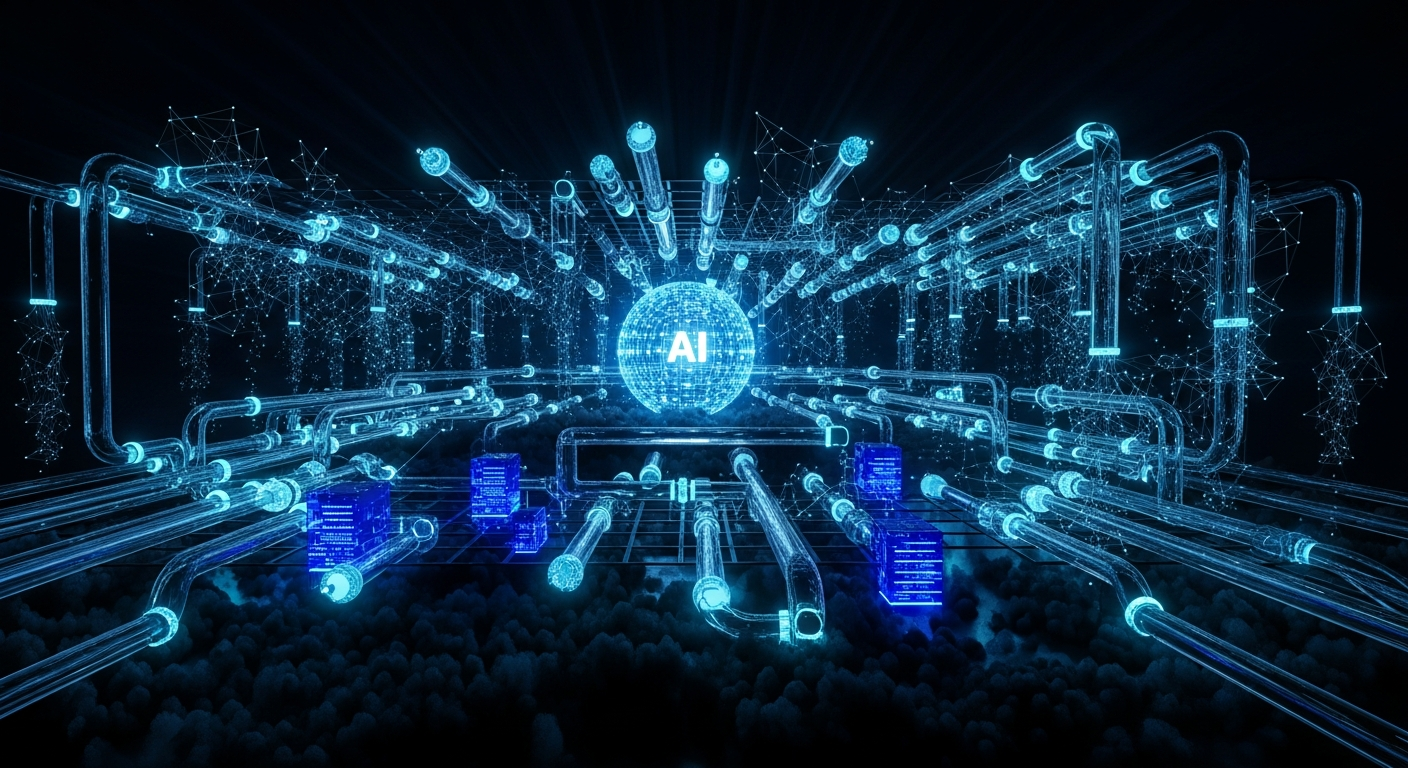
Scaling Influencer Marketing Campaign Attribution with Autonomous Agentic AI Frameworks
The Indian Direct-to-Consumer (D2C) and enterprise e-commerce landscape is undergoing an unprecedented expansion. Driven by rapid digital adoption across Tier-1 to Tier-4 markets, influencer marketing has evolved from an experimental brand-awareness line item into a core performance engine. Brands are deploying billions of INR into creator ecosystems across platforms like Instagram, YouTube, and regional short-video applications. However, modern Chief Marketing Officers (CMOs) and Chief Technology Officers (CTOs) face a glaring systemic limitation: the structural failure of legacy attribution models.
Last-click attribution, static promo codes, and isolated UTM parameters fail to capture complex, multi-touch, multi-platform consumer journeys. In a market where dark social—such as WhatsApp group shares, direct messages, and cross-platform content consumption—dominates conversion pathways, traditional analytics platforms leave up to 60% of real conversion value unallocated. The result? Misallocated performance budgets, inflated Acquisition Costs (CAC), and an inability to scale creator partnerships with mathematical precision.
To solve this enterprise bottleneck, forward-thinking growth organizations are abandoning deterministic tracking scripts in favor of Autonomous Agentic AI Frameworks. By deploying decentralized, specialized AI agents orchestrated via Retrieval-Augmented Generation (RAG) and Graph Neural Networks, enterprises can autonomously track, analyze, reconcile, and optimize influencer attribution across millions of touchpoints in real-time.
Key Takeaways
- Beyond Deterministic Tracking: Legacy UTMs and coupon codes leave massive revenue blind spots in multi-channel Indian D2C ecosystems; Autonomous Agentic AI bridges this gap through probabilistic identity resolution and context mining.
- Multi-Agent Architecture: Specialized autonomous agents—spanning ingestion, video/audio multimodal parsing, identity resolution, and ledger reconciliation—execute complex attribution workflows without human intervention.
- RAG & Vector Graphs: Integrating Retrieval-Augmented Generation with Vector Databases enables real-time semantic analysis of unstructured social noise, comment sentiment, and dark social buying signals.
- Fractional Multi-Touch Attribution (MTA): Agentic frameworks dynamically assign algorithmic weight (Shapley Value & Markov Chains) across macro and micro-influencers throughout the entire funnel.
- Real-Time Budget Optimization: Autonomous loops instantly shift ad-spend and payout contracts based on live ROI metrics, mitigating bot fraud and engagement manipulation.
The Structural Failure of Legacy Attribution in High-Velocity Indian Markets
Traditional attribution architecture was built for deterministic, web-centric user journeys. A user clicks a banner ad, accepts cookies, and purchases within a 7-day window. Modern creator marketing in India operates completely outside these bounds.
A typical consumer path often looks like this:
- A consumer watches an unboxing Reel by a tech influencer on Instagram.
- The consumer shares the post via a private WhatsApp group (Dark Social).
- Three days later, the consumer watches a detailed review video on YouTube by a regional micro-influencer in Hindi or Tamil.
- The consumer searches the brand directly on Google or Amazon India and executes the purchase without ever clicking a trackable link or using a discount code.
Under conventional Google Analytics 4 (GA4) or basic attribution models, this revenue is incorrectly attributed to "Direct" or "Organic Search." The creators who drove the high-intent consideration phase receive zero performance credit. Consequently, performance marketing teams prematurely scale back funding for high-converting upper-funnel influencers while over-indexing on expensive late-stage retargeting ads.
The Problem of Unstructured and Vernacular Media
India’s creator economy is fundamentally multimodal and linguistically diverse. Legacy systems cannot parse visual context within an Instagram Story, spoken brand mentions in regional vernacular podcasts, or context embedded inside video comments. Manually logging and evaluating tens of thousands of creator assets monthly is humanly impossible and economically unfeasible.
Architectural Blueprint: Multi-Agent Autonomous AI Framework for Attribution
Solving non-linear attribution at enterprise scale requires moving beyond static ML pipelines toward an Autonomous Agentic AI Framework. Unlike traditional software that runs linear code, agentic systems use autonomous LLM-powered units that possess agency: they perceive environments, make reasoning decisions, execute code, query databases, and collaborate with other agents via a Directed Acyclic Graph (DAG) architecture.
Below is the architectural stack engineered for real-time, multi-touch influencer campaign attribution:
1. Multimodal Data Ingestion & Computer Vision Agents
The base layer of the framework deploys autonomous harvester agents integrated directly into platform Graph APIs (Meta, YouTube, TikTok, X) alongside headless scraper instances for public unstructured data. When an influencer publishes content referencing the brand, the Ingestion Agent triggers downstream workflows:
- Vision-Language Agents (VLMs): Autonomous visual agents scan video frames to detect brand logos, product placements, visual packaging variations, and on-screen text overlay using OCR (Optical Character Recognition).
- Audio Transcription & NLP Agents: Utilizing models like Whisper fine-tuned on Indian vernacular accents and code-switched dialects (e.g., Hinglish, Tanglish), audio tracks are transcribed into clean semantic text blocks in real-time.
2. Contextual RAG & Sentiment Mining Engine
Raw text and transcriptions are chunked and converted into high-dimensional vector embeddings, then stored in vector databases like Pinecone or Qdrant. A dedicated Contextual Analysis Agent running a RAG pipeline continuously queries these vector stores against historic sales signals.
Instead of just counting direct link clicks, the RAG agent evaluates audience engagement context: Are comment sections asking "Where can I buy this in Mumbai?" or "Is this suitable for sensitive skin?" The agent quantifies Purchase Intent Density (PID), calculating a numeric score that reflects the true bottom-funnel interest generated by that specific creator post.
3. Probabilistic Identity Resolution & Dark Social Graph Agent
To bridge the gap between social view impressions and final un-tracked website purchases, an Identity Resolution Agent correlates aggregate data streams using advanced probabilistic algorithms:
$$\text{Attribution Probability} = f(\Delta \text{Geo Traffic}, \Delta \text{Direct Search}, \text{Time-Decay Window}, \text{Content Velocity})$$
When a regional creator publishes a review, the agent isolates localized geo-spikes (e.g., pin-code or city-level traffic lifts in Bengaluru or Ahmedabad), cross-references time-stamps of organic search volume surges, and maps these anomaly vectors back to the influencer's post deployment window. This establishes fractional multi-touch attribution without violating user privacy policies or relying on third-party cookies.
4. Multi-Touch Algorithmic Attribution Engine (Shapley & Markov Agents)
Rather than relying on outdated single-touch models, the system deploys dedicated mathematical agents that continuously re-calculate campaign attribution using advanced game theory and statistical mechanics:
- Shapley Value Agent: Treats every influencer within a user’s touchpoint history as a player in a cooperative game, assigning marginal revenue values based on their exact contribution to driving the final conversion.
- Markov Chain Removal Effect Agent: Simulates conversion paths with and without a specific creator’s content nodes. If removing an influencer’s reach causes a 30% drop in overall campaign conversions, that creator is allocated a proportional baseline fraction of total revenue attribution.
5. Autonomous Fraud Mitigation & Financial Reconciliation Agent
Ad-fraud and bot networks plague influencer marketing. Fake followers, engagement pods, and automated click farms distort performance data. The Fraud Detection Agent performs continuous anomaly detection on engagement graphs:
- It flags sudden non-linear comment velocity spikes originating from known server farms.
- It measures follower audit metrics and cross-checks engagement patterns against natural distributions.
Once verified, the Reconciliation Agent interfaces with smart contract layers or enterprise ERP systems (SAP, Oracle) to automatically calculate real-time ROAS, execute dynamic creator payouts based on actual attributed value, and adjust campaign spending targets autonomously.
Implementing Autonomous Agentic AI Frameworks: Technical Stack & Workflow
Building an enterprise-grade agentic attribution pipeline requires combining production-tested modern AI engineering components:
| Component Layer | Technology Stack | Framework Responsibility |
|---|---|---|
| Agent Orchestration | LangGraph / AutoGen / CrewAI | Manages stateful multi-agent state machines, event queues, loops, and inter-agent communication protocols. |
| Vector Infrastructure | Pinecone / Qdrant / Milvus | Stores multimodal embeddings of transcripts, comments, and visual frames for RAG queries. |
| LLM / VLM Backbone | Claude 3.5 Sonnet / Llama 3 Vision / GPT-4o | Executes complex semantic understanding, multi-lingual translation, and visual element extraction. |
| Data Ingestion & Pipelines | Apache Kafka / Spark / Temporal.io | Handles high-concurrency event streaming, Webhook processing from Shopify/Custom APIs, and scheduled jobs. |
| Analytics & Storage | ClickHouse / Snowflake / BigQuery | Executes high-speed OLAP queries on transactional data and real-time attribution event tables. |
Step-by-Step Execution Workflow
- Ingestion Trigger: An API webhook fires when a creator publishes content mapped to an active campaign ID.
- Multimodal Ingestion: Ingestion agents split the asset into visual frames and audio streams, passing raw data to processing agents.
- Semantic & Intent Analysis: Transcripts are vector-embedded. RAG agents query the database to score contextual buyer intent and sentiment.
- Data Correlation & Anomaly Mapping: The Identity Resolution Agent continuously checks real-time transactional databases (Shopify, Woocommerce, custom payment gateways) for localized sales velocity changes matching content drop timestamps.
- Attribution Score Calculation: Markov Chain agents recalculate fractional revenue share across all active touchpoints for that customer segment.
- Autonomous Execution: If an influencer's attributed ROAS exceeds performance thresholds, an optimization agent autonomously increases their campaign budget allocation via Meta Ads Manager API or triggers automated payout bonuses via payment APIs.
Quantifiable Business Impact: From Micro-Influencers to Macro Campaigns
Shifting from legacy attribution methods to an enterprise Autonomous Agentic AI framework yields immediate structural competitive advantages for D2C brands and performance agencies:
- 30% to 45% Reduction in Effective CAC: By accurately identifying mid-funnel micro-influencers who generate significant organic search and direct conversion lift, brands can optimize spend away from overpriced macro-creators.
- 100% Elimination of Data Blindspots: Real-time probabilistic tracking eliminates dark social blind spots, capturing value generated across WhatsApp, Telegram, and vernacular platforms.
- Automated Fraud Elimination: Autonomous verification agents detect and flag engagement manipulation before campaign funds are disbursed.
- Real-Time Dynamic Budget Allocation: Marketers no longer have to wait weeks post-campaign to analyze performance. AI agents optimize ad spend hourly while campaigns are live.
Conclusion: The Future of Autonomous Performance Marketing
Influencer marketing attribution is no longer just a tracking problem—it is a data orchestration challenge. As the Indian D2C sector scales toward a projected $100 Billion market size, organizations relying on outdated tracking parameters and manual spreadsheets will struggle with ballooning acquisition costs and unquantifiable ad spend.
Autonomous Agentic AI Frameworks provide the definitive technology infrastructure required to transform creator marketing into a predictable, mathematically verifiable, and scalable performance channel. By turning unstructured content into real-time transactional intelligence, AI agents empower growth leaders to make confident, data-backed decisions that drive sustained profitability.
Frequently Asked Questions (FAQ)
1. How does Agentic AI track conversions without relying on cookies or UTM codes?
Agentic AI frameworks leverage probabilistic identity resolution combined with spatial-temporal analysis. Agents analyze geo-targeted traffic anomalies, real-time search volume spikes, dynamic comment intent parsing, and transactional data correlations. This mathematical modeling maps conversion velocity directly to specific influencer content drops without invading individual user privacy or depending on deprecated third-party tracking cookies.
2. Is an Autonomous Agentic AI Attribution system compatible with existing stack infrastructures like Shopify and GA4?
Yes. Agentic frameworks are engineered as middleware layers. They connect to existing e-commerce engines (Shopify, WooCommerce, custom enterprise backends), web analytics platforms (GA4, Adobe Analytics), and social platform APIs via custom webhooks and REST APIs. The agents process, reconcile, and feed accurate, enriched attribution data back into your enterprise data warehouse (Snowflake, BigQuery) or analytics dashboards.
3. How does the system handle regional Indian languages and code-switched content (e.g., Hinglish)?
The architecture integrates fine-tuned multimodal LLMs and speech-to-text engines (such as OpenAI Whisper custom implementations) trained explicitly on Indian accents, regional languages (Hindi, Tamil, Telugu, Kannada, Bengali), and code-switched vernaculars (like Hinglish or Tanglish). This allows the NLP agents to accurately gauge viewer sentiment, brand mentions, and buyer intent within diverse regional creator content.
4. What is the difference between traditional AI attribution models and Autonomous Agentic AI?
Traditional AI attribution utilizes static machine learning algorithms to process historic data in batch jobs—offering passive, backward-looking analytics. Autonomous Agentic AI utilizes self-directed agents capable of perceiving real-time data streaming, dynamic reasoning via RAG, executing external API actions, calling tools, detecting fraud on the fly, and autonomously reallocating marketing budgets without requiring manual human data extraction or intervention.
Architect Your Autonomous AI Infrastructure with Ishwar Rathod
Ready to modernize your digital growth pipeline, deploy production-grade agentic frameworks, or scale high-concurrency cloud engineering architectures for your enterprise?
To scale your platform with autonomous AI systems, enterprise web architecture, or data-driven growth pipelines, initiate an executive consultation with Ishwar Rathod at https://ishwarrathod.com/.
Want to Scale Your Core Performance Metrics?
Let's construct multi-channel algorithmic acquisition pipelines explicitly for your business operations.
Initialize Consultation Session →